Home / Practice Standards & Resources / Infographics
Infographics
One page visuals that summarize key practice standards and advocacy points in a format that is easy to share with educators, administrators, IEP teams, and families.
NEW
A three phase visual guide to planning for, responding to, and recovering from school emergencies when students rely on hearing technology and visual communication. Pairs with the EAA checklist for teachers and school teams.
View Resource
Every infographic is free to use. Open one to view it full size, read the supporting detail, and download a print ready copy to share. Where a companion brochure exists, it is marked on the card and available from that infographic's page.
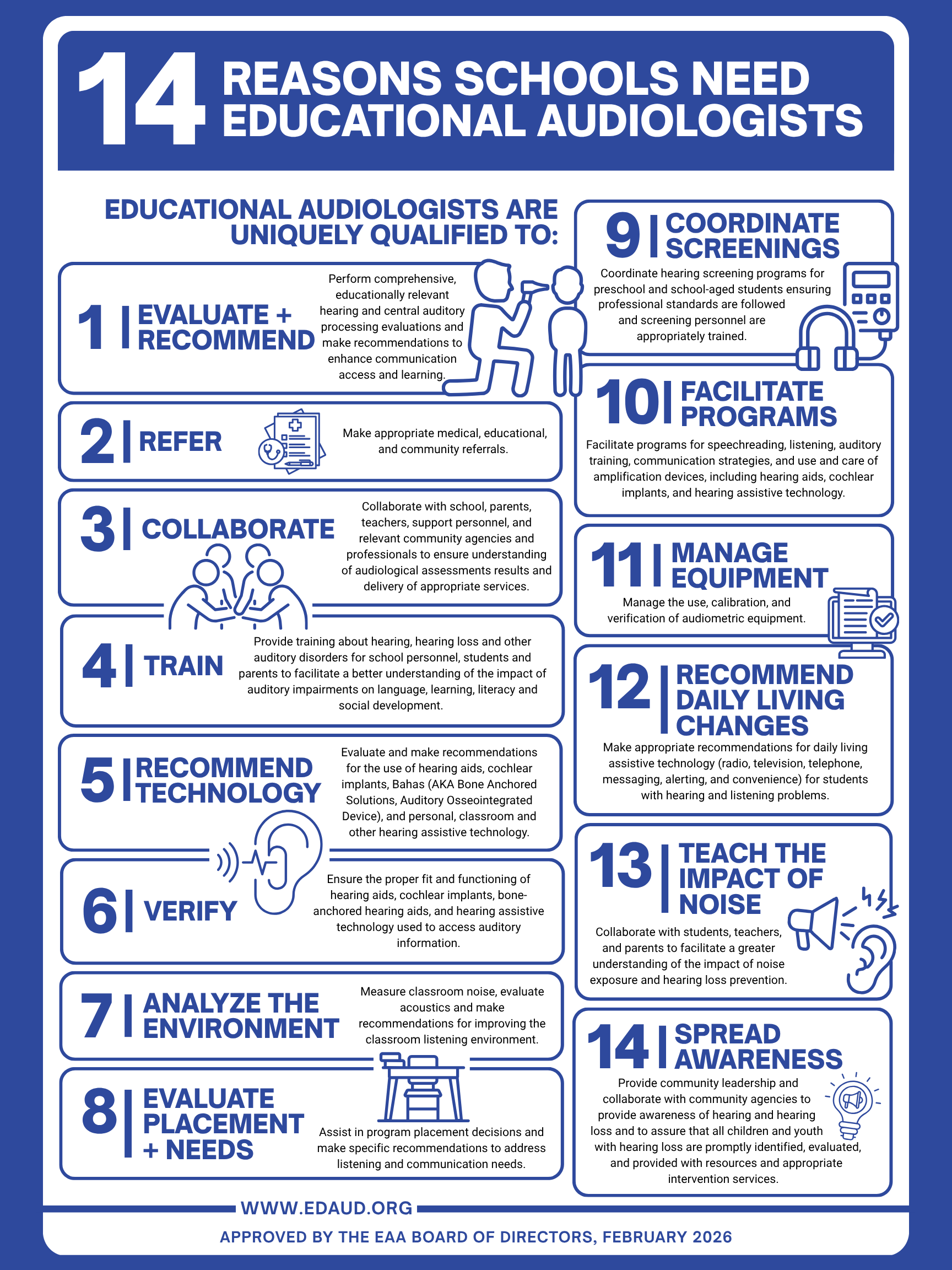
Advocacy
Make the case for educational audiology with administrators, school boards, and policymakers.
View Resource
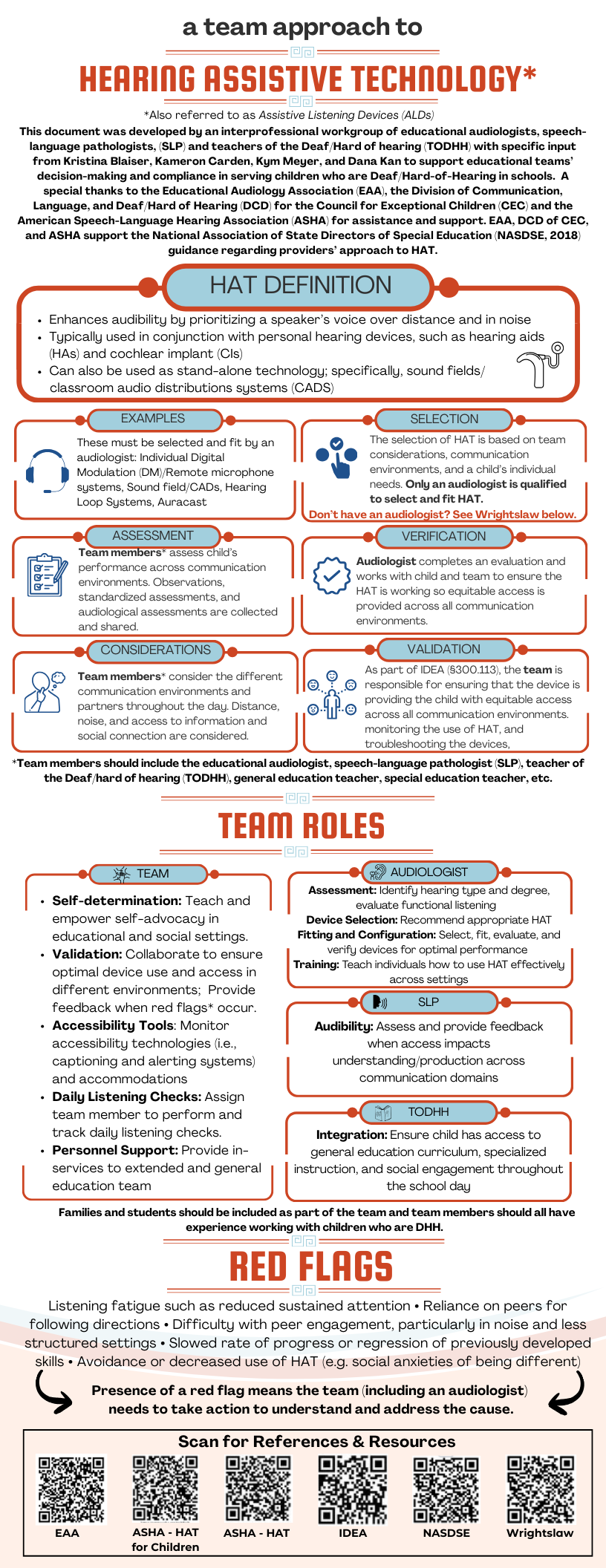
Technology
Who does what across HAT selection, fitting, and monitoring, plus the red flags to watch for.
View Resource
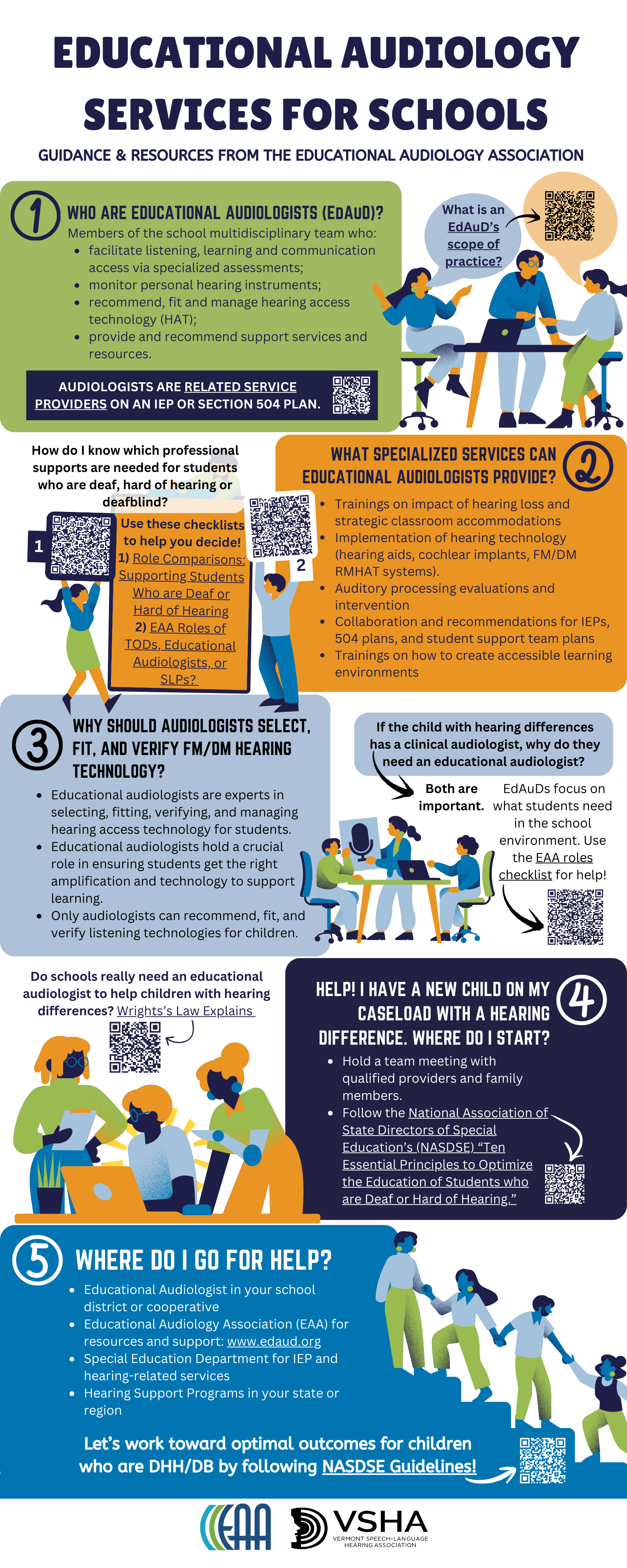
Advocacy Brochure Included
A one page overview of the services educational audiologists provide in school settings. Includes a companion tri-fold brochure to print and hand out.
View Resource
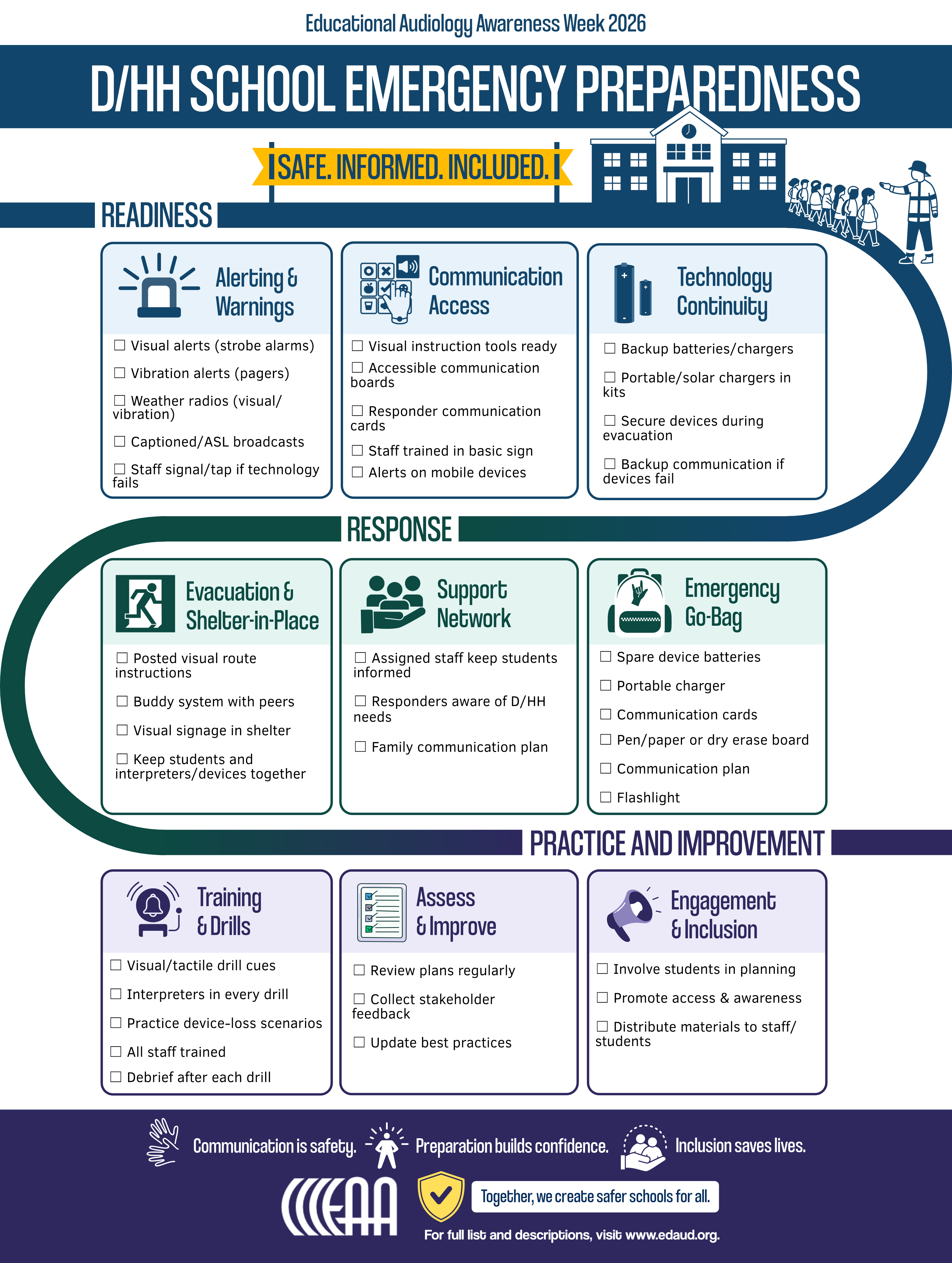
Preparedness
Planning for, responding to, and recovering from school emergencies, with the full teacher checklist.
View Resource
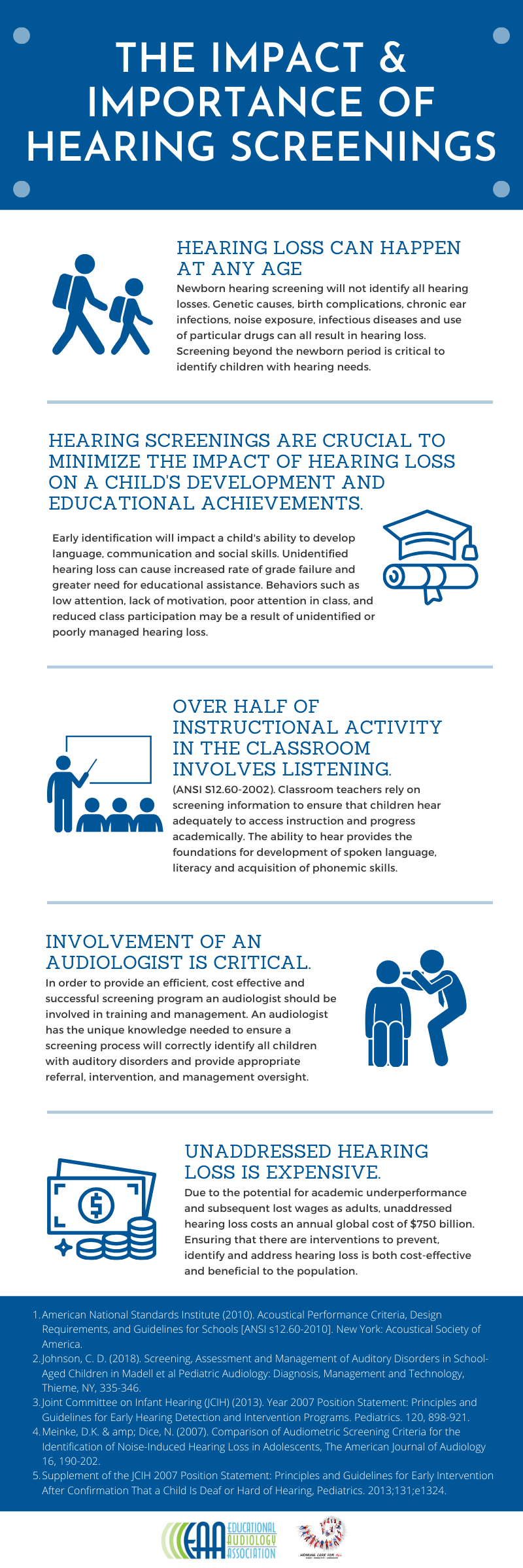
Screening
Why hearing screening matters for school aged children, and what unidentified hearing loss costs.
View Resource

Acoustics
How noise and reverberation affect learning, plus the ANSI/ASA S12.60 standards.
View Resource
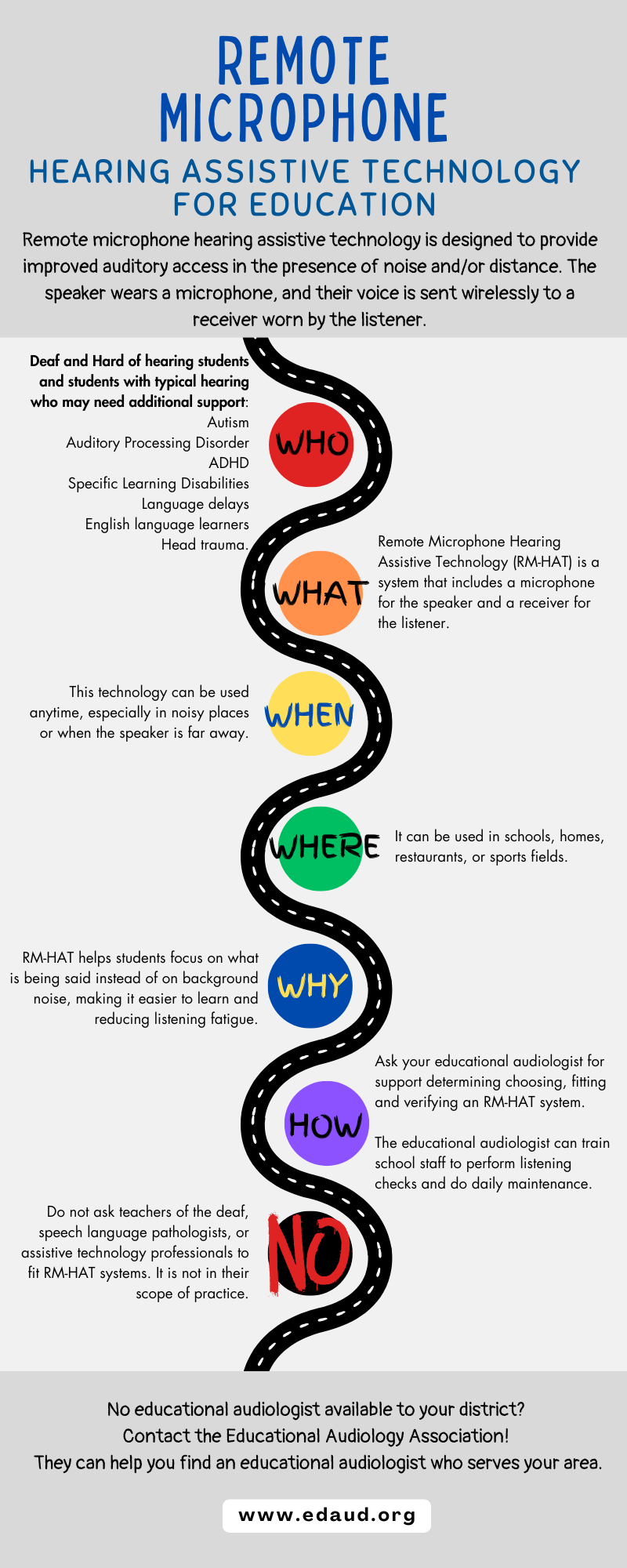
Technology
What remote microphone systems are, who benefits, and how to get started.
View Resource
Keep Exploring
By Topic
Every infographic lives alongside the research and position statements for its topic.
Browse topics →
More Tools
Forms, guides, and external resources for day to day school audiology practice.
Open the library →
Make the Case
Advocacy tools for demonstrating the value of educational audiology services.
View topic →
|