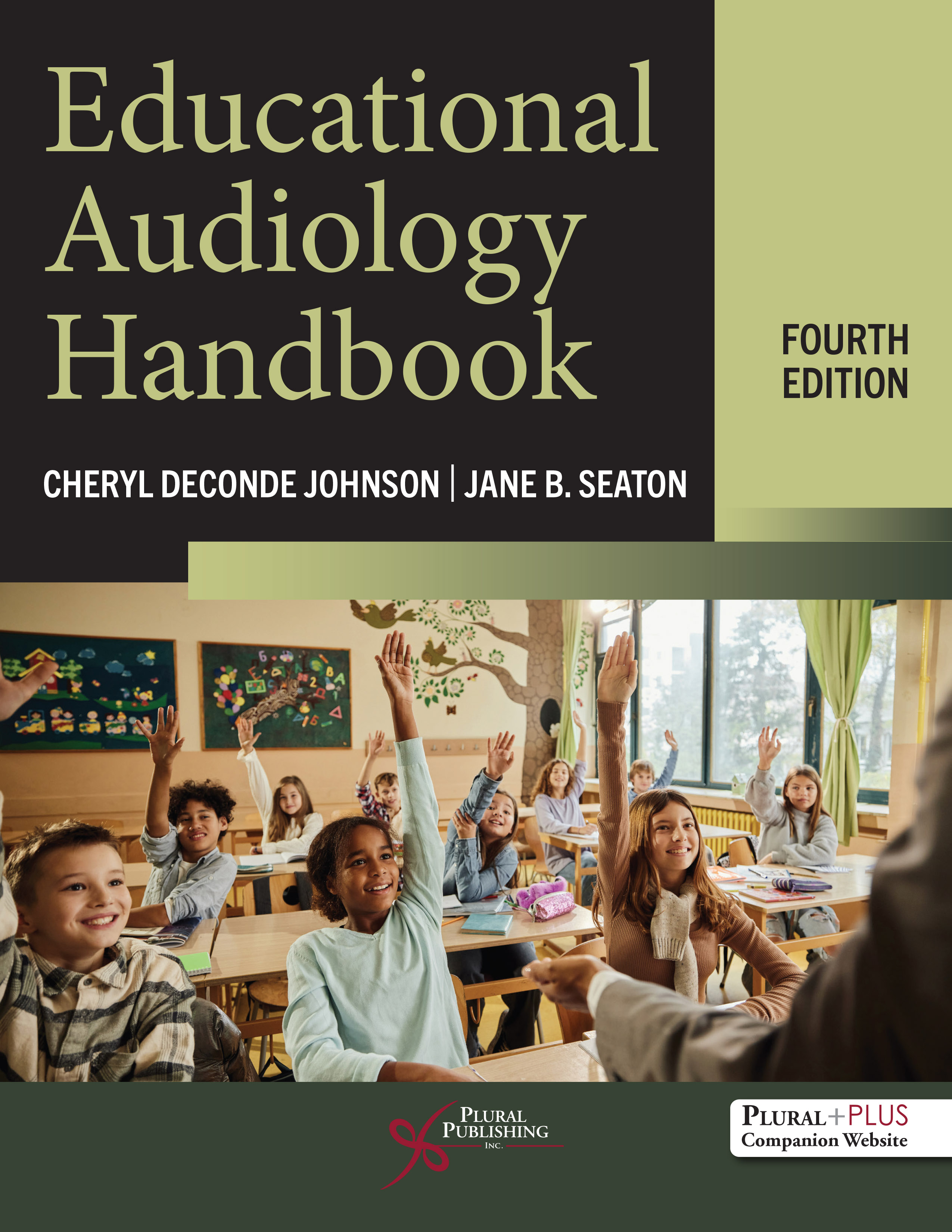

|
Home / Practice Standards & Resources / Student & Family Support Student & Family SupportCounseling, (re)habilitation, captioning, mentorship, listening fatigue, and safety planning: the human side of supporting students who are deaf or hard of hearing and their families. Three Resources to Look at FirstEAA Resource Free Download Emergency Preparedness ChecklistA checklist and infographic for keeping students who are deaf or hard of hearing safe in emergencies: alerting, communication access, devices, and drills. External · Hands & Voices Hands & VoicesA parent-driven organization supporting families of children who are deaf or hard of hearing, with articles, advocacy tools, and community. External · NDC National Deaf CenterResearch-grounded resources, transition planning, and accommodations guidance for students who are deaf or hard of hearing. Key Points at a GlanceStudents Are the CenterService planning works best when student preferences and self-advocacy are honored. Listening Fatigue Is RealSustained listening drains cognitive energy, and accommodations make a real difference. Captioning and Mentorship HelpBeyond technology, peers and tools create access to learning and community. Families Are PartnersEngaged families amplify everything else the team is doing for the student. EAA Practical Tools & ResourcesEAA Resource Members Only Auditory (Re)HabilitationEAA guidance on auditory (re)habilitation in school settings. Log in to access. EAA Resource Members Only Response to InterventionRtI guidance for students who are deaf or hard of hearing. Log in to access. 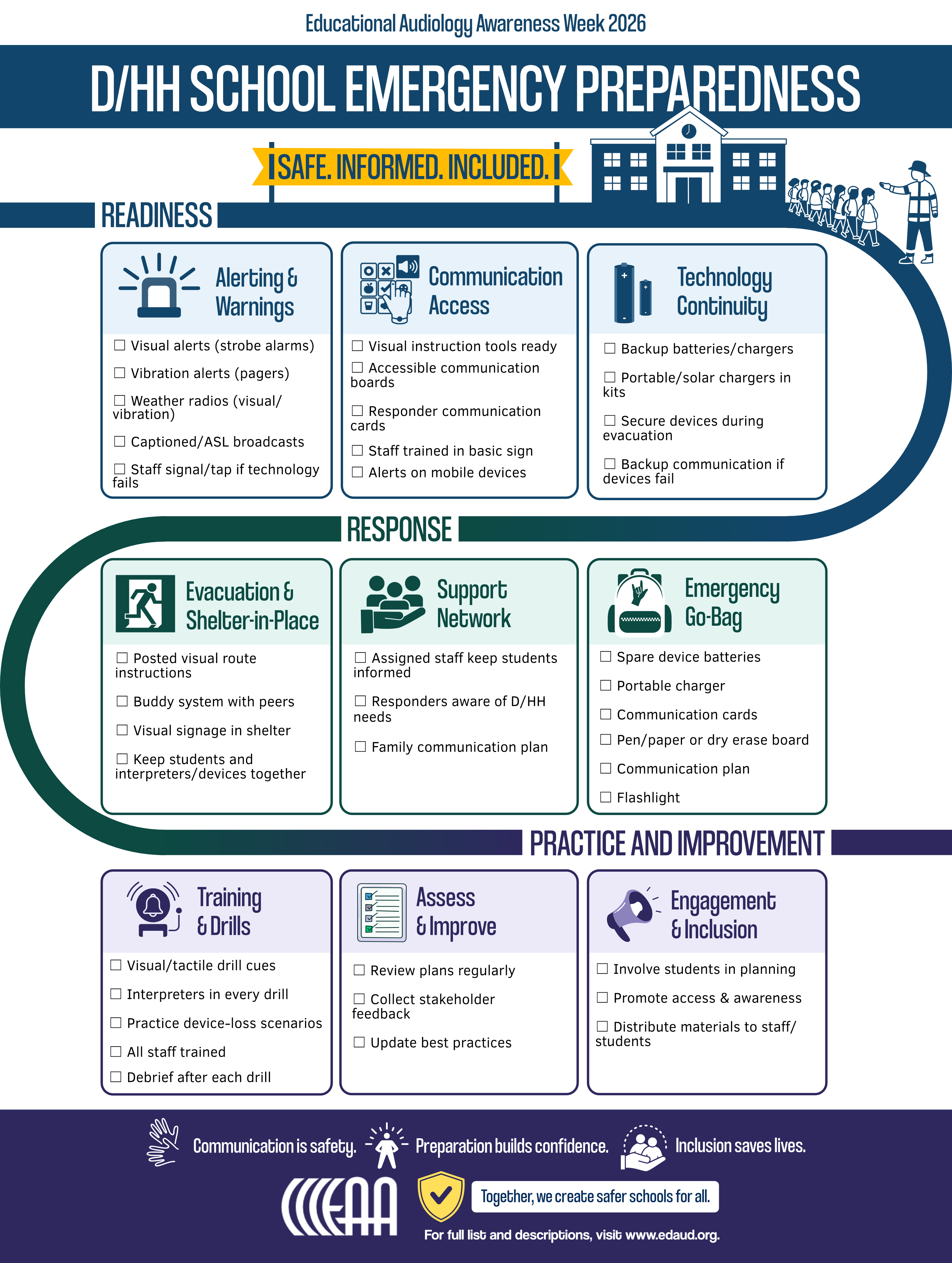
EAA Resource Emergency Preparedness ChecklistChecklist and infographic for supporting students who are deaf and hard of hearing in emergencies: alerting, communication access, devices, and drills. Free download. EAA Research & EvidencePeer-reviewed articles from the Journal of Educational, Pediatric & (Re)Habilitative Audiology. External ResourcesExternal links are informational and not endorsements. External · Hands & Voices Family-to-Family SupportHow parent-to-parent connections help families raising children who are deaf or hard of hearing, from the Hands & Voices Family Leadership in Language and Learning (FL3) center. External · Hands & Voices Parent Resources HubHands & Voices' curated portal of parent resources for families of children who are deaf or hard of hearing (Handbook Appendix 3–A). External · NCHAM “Just in Time” Resources for FamiliesA directory of family-to-family supports, with a focus on state-level resources, that families can work through at their own pace. External · Hearing First Familiar Sounds Audiogram (English & Spanish)A free eBook and worksheet that help families read an audiogram, based on 2023 research by Davidson, Uchanski, and colleagues. External · ASHA Funding Resources for Hearing Aids & TechnologyASHA's directory of programs that help families pay for hearing aids, cochlear implants, and other hearing technology. External · AG Bell AG Bell AssociationListening and spoken language community, advocacy, and family resources. External · ASDC American Society for Deaf ChildrenDeaf community and signed-language perspective for families and educators. External · DCMP Described and Captioned Media ProgramA free library of captioned and described media for eligible students who are deaf or hard of hearing. External · UMT Functional Auditory Performance Indicators (FAPI)Stredler-Brown & Johnson 7-category integrated auditory-skills profile (Handbook Appendix 9–H). External · Anderson Audiology Self-Advocacy Checklists ("I Can…")Anderson & Spangler checklists, by grade band: Elementary, Middle, and High School (Handbook Appendix 10–E). External · Anderson Inventory of Independence & Self-Advocacy SkillsAn informal inventory of independence and self-advocacy skills for students who are deaf or hard of hearing. External · KU CDD Self-Determined Learning Model, Teacher's GuideShogren et al., KU Center on Developmental Disabilities (Handbook Appendix 10–A). External · Vanderbilt Vanderbilt Fatigue ScalesValidated scales for measuring listening-related fatigue in school-age students who are deaf or hard of hearing. External · Hands & Voices O.U.R. Parent Safety ToolkitStrategies from the O.U.R. Children's Safety and Success Project to help families protect children who are deaf or hard of hearing from abuse, neglect, and bullying, while building safety skills and independence. PDF. External · NFPA Emergency Evacuation Planning Guide for People with DisabilitiesThe National Fire Protection Association's guide to building evacuation plans for people with disabilities. Pairs with EAA's Emergency Preparedness Checklist. Beyond the Audiogram Support the whole student and the family around them.The educational audiologist's role extends beyond hearing technology to counseling, fatigue management, captioning, and family partnership. Members-Only Discussion In the EAA CommunityOn the EAA listserv, members regularly discuss student and family support. Recent threads have covered:
Related TopicsCollaboration & Team Roles ›Counseling and support are team work. Early Intervention & Transitions ›Family partnership during transitions. Amplification & Hearing Technology ›Counseling on technology use and identity. Frequently Asked QuestionsHow can I help with listening fatigue?Build in listening breaks, optimize the listening environment, and help the team understand that fatigue is a real, accommodable concern. The JEPRA article How Hard Can It Be to Listen? is a helpful primer. What captioning options are available in schools?Schools can use live human captioners (CART), automated speech-to-text, and pre-captioned video. Each option has accuracy and access trade-offs that depend on the student and the activity. How do I support families during transitions?Provide clear roadmaps, warm introductions to the next team, and resources tailored to the upcoming setting. Connect families with parent-led organizations like Hands & Voices. Where can families connect with other families?Parents who are further along the same path are often the most trusted source of support. Hands & Voices chapters offer family-to-family programs, and NCHAM's "Just in Time" directory points families to supports in their own state. Where can families find help paying for hearing technology?Many programs help with hearing aids, cochlear implant equipment, and remote microphone systems, but most require an application and have income guidelines or deadlines. ASHA's Funding Resources directory lists national and child-focused programs. State EHDI programs and local civic groups such as Lions and Sertoma are also worth asking. How do we plan for a student's safety in an emergency?Plan for how the student will be alerted, how instructions will reach them, and what happens to their devices during drills and real events. Build those details into the IEP or 504 plan, and practice them. EAA's Emergency Preparedness Checklist is a good starting point. What's RtI for students who are deaf or hard of hearing?Response to Intervention is a tiered support framework. EAA's Response to Intervention member resource walks through how RtI applies in the context of hearing differences and access needs. Have a resource to suggest?Help keep this page current. EAA members are welcome to suggest resources to add. Keep ExploringBy Topic
Practice Standards & ResourcesPosition statements, research, and resources organized by practice area. More Tools
Resource LibraryForms, guides, and external resources for day-to-day school audiology practice. |